
Poor Grading Around the Foundation: Why Water Slopes Toward Your Home
Poor grading around a home’s foundation is one of the most common exterior contributors to basement and crawl space moisture. When the soil surrounding a house slopes toward the structure instead of away from it, rainwater and snowmelt naturally collect along the foundation walls.
Over time, repeated exposure to surface water can increase soil saturation, create pressure against below-grade walls, and allow moisture to enter through small cracks or joints. In many cases, the problem isn’t excessive rainfall — it’s improper drainage direction.
Understanding how foundation grading works helps homeowners determine whether water is being safely directed away from the home or unintentionally funneled toward it.
What Is Poor Grading Around a Foundation?
Poor grading occurs when the ground around a home does not slope effectively away from the foundation. Instead of directing rainwater and runoff away from the structure, the grade may allow water to collect near foundation walls or repeatedly flow toward the home.
Poor grading can develop from the original site grading or from changes over time, including soil settlement, erosion, landscaping, or other alterations to the ground surface. Persistent drainage toward the foundation can increase soil moisture and contribute to basement, crawl space, and foundation water problems.
What Is Foundation Grading?
Foundation grading refers to the slope of the soil surrounding a home’s exterior walls. After construction, soil is placed back against the foundation and shaped to encourage water to drain away from the structure rather than collect beside it.
The primary goal of grading is simple: move surface water away from the foundation as efficiently as possible. When rain falls or snow melts, gravity directs that water across the yard. Proper grading ensures that runoff flows outward, reducing the amount of moisture that lingers against below-grade walls.
Grading is typically measured in inches of vertical drop per horizontal foot. A common guideline is approximately six inches of fall within the first ten feet extending away from the foundation. This gradual slope helps prevent water from settling near the home, where it can contribute to issues such as water pooling near the foundation or moisture entering the basement.
When the slope is inadequate, or reversed, water may remain in contact with foundation walls for extended periods. Over time, this prolonged exposure increases the likelihood of seepage, damp conditions, or even visible water in the basement after heavy rainfall.
What Is Negative Grading?
Negative grading occurs when the soil around a home slopes toward the foundation instead of away from it. Rather than directing rainwater outward into the yard, the ground surface funnels water back toward the structure.
When this happens, runoff tends to collect along the base of foundation walls. Even if the amount of rainfall is moderate, repeated pooling against the home increases soil saturation and extends the amount of time moisture remains in contact with the structure.
Negative grading is often subtle. In many cases, the slope change is only a few inches and may not be obvious without careful observation. Homeowners may not notice the issue until they begin seeing signs such as surface water accumulation or dampness inside the basement.
One of the most common causes of negative grading is natural soil settlement. After construction, the backfilled soil around a foundation gradually compacts and sinks over time. This settling can create a shallow depression along the perimeter of the home, unintentionally reversing the original slope and allowing water to drift back toward the structure.
Because grading changes slowly, negative slope conditions may develop years after a home was built — even if the property initially drained correctly.
How Negative Grading Leads to Water Collection
When soil slopes toward the home, rainwater is naturally directed toward the foundation instead of away from it. This often leads to water pooling near the structure and increasing soil saturation over time.
How Much Slope Is “Enough”?
A commonly referenced grading guideline is for the ground to slope away from the foundation by approximately six inches over the first ten feet. This gradual drop helps direct surface water away from the home before it can collect and saturate the soil near foundation walls.
However, the effectiveness of grading is influenced by more than just slope measurements. Local soil type plays an important role in how water behaves once it reaches the ground. Clay-heavy soils tend to absorb water slowly and retain moisture for extended periods, increasing the amount of pressure that can develop against below-grade walls. In contrast, sandy soils drain more quickly but may allow water to travel deeper toward the foundation.
Areas with heavy seasonal rainfall or slow-draining soil conditions often experience more persistent surface water movement near foundations. Areas with heavy seasonal rainfall or slow-draining soil conditions often experience more persistent surface water movement near foundations.
These differences mean that two homes with identical slopes can experience very different moisture outcomes depending on soil composition. Homeowners can learn more about how soil affects drainage and foundation performance in our guide to soil types and water behavior.
In areas with expansive clay or prolonged soil saturation, surface slope alone may not fully prevent moisture buildup. Conditions involving persistent groundwater or highly absorbent soil are explored further in our discussion of soil saturation and expansive clay.
When Improper Slope Begins to Cause Problems
If the slope around a home does not move water far enough away from the foundation, moisture can accumulate and contribute to ongoing drainage issues.
Common Causes of Poor Grading
Poor grading rarely develops overnight. In many cases, drainage issues around a foundation evolve gradually as soil shifts, landscaping changes, or exterior features alter the natural flow of water. A home may have been graded properly at the time of construction, only to experience subtle slope changes years later.
Understanding the most common factors that contribute to grading problems can help homeowners recognize why water may be collecting near the foundation, even if no major exterior changes seem obvious.
Soil Settlement After Construction
One of the most common causes of poor grading is natural soil settlement following construction. When a home is built, soil is excavated to create space for the foundation. After the foundation walls are completed, that soil is placed back into the excavation area as fill soil, a process commonly known as backfilling.
Even when properly compacted, backfill soil does not return to its original density immediately. Over time, gravity and moisture cause the soil to compress and settle. This gradual settling can create a shallow depression along the perimeter of the home, reducing the original slope that was designed to direct water away.
As the soil lowers near the foundation, the surrounding yard may remain at a slightly higher elevation. This subtle shift can unintentionally reverse the drainage pattern, allowing rainwater to drift back toward the structure instead of away from it.
Because settlement happens slowly — often over several years — homeowners may not notice grading changes until signs of water accumulation begin to appear.
Landscaping Changes
Landscaping modifications around a home can gradually affect how water drains near the foundation. While these changes are often cosmetic or intended to improve curb appeal, they can unintentionally alter the original grading pattern.
For example, mulch beds are sometimes built up against exterior walls over time. As additional layers of mulch are added season after season, the soil surface near the foundation may rise higher than the surrounding yard. This buildup can reduce or eliminate the intended slope away from the home, allowing water to linger closer to the structure.
Similarly, flower beds designed to retain moisture for plant health can hold water near foundation walls after heavy rainfall. Soil amendments that improve plant growth may also increase water retention, slowing drainage in areas where runoff should ideally move outward.
Raised planters or decorative landscape borders placed directly against the home can further trap moisture. These features may block the natural flow of surface water, creating localized pooling conditions that contribute to soil saturation along the foundation perimeter.
Because landscaping changes often happen gradually, drainage patterns can shift without obvious warning signs. What begins as a purely aesthetic update may eventually influence how water behaves around the home.
Hardscaping That Redirects Water
Hard surfaces around a home can significantly influence how rainwater moves across a property. Unlike soil, which absorbs some moisture, materials such as concrete, asphalt, and pavers shed water quickly. If these surfaces are not properly sloped, they can unintentionally direct runoff toward the foundation.
Driveways are a common example. A driveway that angles slightly toward the home may channel water directly to the base of the foundation during heavy rainfall. Even a modest slope can concentrate large amounts of runoff along one section of the structure.
Patios and walkways can create similar issues. When these surfaces are installed flush against exterior walls without proper outward slope, water may accumulate along the foundation edge. Over time, repeated exposure increases soil saturation in that area.
Because hardscaping is designed to be durable and long-lasting, drainage patterns created during installation often remain in place for many years. If the original slope directs water toward the home — even slightly — the foundation may be exposed to consistent runoff during rain events.
Unlike soil settlement, which develops gradually, hardscaping-related drainage problems are typically tied to installation angle and surface design.
| Condition | What Homeowners May Notice | Potential Water Impact | Common Improvement |
|---|---|---|---|
| Negative grading | Water collecting near the home | Increased moisture near foundation walls | Regrading soil away from the structure |
| Settling soil | Low areas or sunken landscaping beds | Surface water moving toward the foundation | Adding and compacting soil |
| Downspout discharge too close to the home | Erosion channels or saturated soil | Repeated water concentration near the foundation | Extending downspouts farther away |
| Clay-heavy soil conditions | Cracking, expansion, or persistent wet areas | Increased soil pressure and slower drainage | Improved drainage and water management |
“Poor grading problems often develop gradually as soil settles, drainage patterns change, or water repeatedly flows toward the same area near the home. Many homeowners first notice the effects indoors even though the moisture source begins outside the foundation.”
— Foundation Water Guide Editorial Team
Recommended Foundation Grading Guidelines
- Soil should generally slope away from the foundation by about 6 inches over the first 10 feet
- Water should move away from the home rather than collect near basement walls or crawl spaces
- Downspouts are often more effective when discharging several feet away from the foundation
- Grading conditions should be rechecked after heavy storms, erosion, or landscaping changes
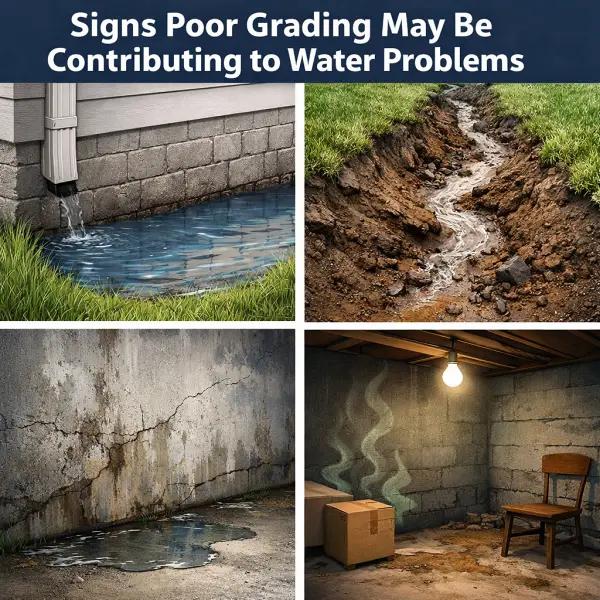
Signs Poor Grading May Be Contributing to Water Problems
When grading issues allow water to collect near the foundation, the effects often appear gradually. Surface drainage problems outside the home can eventually influence conditions inside — especially during periods of heavy rainfall or snowmelt.
While proper diagnosis requires evaluating multiple factors, the following signs may indicate that poor exterior slope is contributing to moisture concerns:
Water pooling near the foundation after rain events, especially along one side of the home. Surface water that lingers for several hours may suggest inadequate slope. (See: water pooling near the foundation)
Visible soil erosion channels or depressions forming along the perimeter. These can signal repeated runoff flowing toward the structure rather than away from it. (See: soil erosion around foundations)
Damp or stained basement walls, particularly after storms. Persistent exterior moisture increases the likelihood of interior wall seepage. (Learn more about wet basement walls)
A musty odor in the basement following heavy rain. Even without visible standing water, elevated moisture levels can contribute to persistent damp smells. (See: musty smell or damp basement)
It’s important to recognize that grading is just one possible contributing factor. However, when surface water repeatedly accumulates near the foundation, exterior slope conditions are often worth evaluating as part of the overall drainage picture.
Related Water and Foundation Issues to Watch For
If these signs are present, it may help to review how water conditions are affecting the foundation and surrounding structure.
If you’re unsure how serious the issue may be these pages can help guide next steps::
When Grading Alone May Solve the Problem
In some situations, correcting surface slope may be sufficient to reduce or eliminate moisture concerns. When water intrusion is primarily the result of surface runoff flowing toward the home, rather than deeper groundwater conditions, improving exterior grading can significantly reduce foundation exposure to rain and snowmelt.
Grading adjustments are most likely to be effective when:
Water accumulation occurs mainly during or immediately after heavy rainfall.
Pooling is visible along the foundation perimeter.
There are no signs of persistent hydrostatic pressure buildup.
Structural issues such as significant cracking, wall displacement, or long-term interior saturation are not present.
When moisture is driven primarily by surface drainage patterns, improving slope direction can reduce the amount of water that lingers near foundation walls. However, grading may not fully resolve conditions involving high groundwater levels, expansive soils, or ongoing subsurface pressure.
Because each property’s drainage conditions vary, evaluating both surface and subsurface factors is important before determining the appropriate approach.
When Poor Grading Is Only Part of the Issue
While improper slope can contribute to water accumulation near the foundation, it is not always the sole cause of moisture problems. In many cases, grading interacts with other exterior and subsurface conditions that influence how water behaves around a home.
For example, downspouts that discharge too close to the foundation can overwhelm even properly sloped soil during heavy rain. Concentrated roof runoff may saturate the ground faster than surface grading alone can redirect it.
Similarly, soil composition plays an important role. In areas with expansive clay or slow-draining soils, water may remain trapped near foundation walls despite adequate surface slope. Over time, this prolonged saturation can increase pressure against below-grade structures.
High seasonal groundwater levels can also contribute to persistent dampness. When subsurface water rises toward foundation depth, exterior grading adjustments may reduce surface runoff but may not fully eliminate moisture exposure.
Because multiple drainage factors often overlap, evaluating grading in isolation may not provide a complete picture. Surface slope, roof runoff, soil behavior, and groundwater conditions frequently work together to influence foundation moisture patterns.
Understanding this broader context helps prevent oversimplified conclusions and supports more accurate identification of contributing factors.
Other Conditions That May Contribute to Water Problems
Poor grading often works alongside other drainage or soil conditions. Reviewing these factors together can provide a clearer picture of how water is interacting with the foundation.
Key Takeaways
- Poor grading occurs when soil around a home slopes toward the foundation instead of away from it.
- This condition can allow rainwater and surface runoff to collect near the base of the structure.
- Persistent soil saturation near the home can increase moisture pressure against foundation walls.
- Correcting grading around the foundation can help redirect water away from the home and reduce moisture risks.
Where To Go Next
If you want to explore other exterior drainage issues:
If interior moisture symptoms are appearing:
If drainage conditions seem to be getting worse:
If you want to understand foundation water problems where you live:
Frequently Asked Questions About Poor Grading Around a Foundation
What Is Poor Grading Around a Foundation?
Poor grading occurs when the ground around a home slopes toward the foundation instead of away from it. When this happens, rainwater and surface runoff may collect near the structure rather than draining safely away. Over time, this can increase moisture exposure around basement walls, crawl spaces, and foundation materials.
How Much Slope Should the Ground Have Away From a House?
A commonly referenced guideline is for the ground to slope away from the foundation by approximately 6 inches over the first 10 feet. This gradual slope helps direct surface water away from the home before it can collect near foundation walls or saturate the surrounding soil.
Can Poor Grading Contribute to Foundation Cracks?
Poor grading can contribute to conditions that increase stress around a foundation. When water repeatedly collects near the home, soil may expand, soften, or shift over time. In some situations, this movement may contribute to cracking, settlement, or other moisture-related foundation concerns.
What’s the Difference Between Grading and Drainage?
Can Gutters or Downspouts Fix Grading Problems?
Gutters and downspouts can help reduce the amount of roof runoff collecting near the foundation, but they may not fully correct negative grading around the home. If the surrounding soil still slopes toward the structure, water may continue moving back toward the foundation even when gutters are functioning properly.
How Can You Tell if Water Is Collecting Near the Foundation?
Common signs include pooling water after rain, damp soil near the home, erosion channels, musty basement odors, or moisture appearing along basement walls. In some cases, homeowners may notice water problems indoors even though the source begins outside near the foundation.
Do Clay Soils Make Grading Problems Worse?
Clay-heavy soils can make grading problems more noticeable because they absorb and retain water differently than sandy or well-draining soils. When saturated, clay soils may expand significantly, and as they dry, they can contract again. This repeated movement may increase stress around foundations and contribute to shifting soil conditions over time.
Home › Exterior Water Problems › Poor Grading Around the Foundation